LovelyLife® wellness coach web discussions
Join in and connect with team members on the web discussion forum.
-
- Forum
- Topics
- Status
-
-
LovelyLife® Wellness Coaches
The group for LovelyLife® Wellness CoachesAssociated Courses:
LovelyLife® Coach Training 2021 – IHANA006A
LovelyLife® Wellness Coaching 2020 – IHANA005A
IhanaElo®-hyvinvointivalmennus – 2020 IHANA004A - 7
- 10.11.2021 22:35
-
LovelyLife® Wellness Coaches

Regular meals lay the foundation for well-being and maintaining capacity. Finding a suitable eating rhythm will play a central role during the next four weeks. At the same time, we ponder why and what to eat – and on the other hand, why and what not to eat, or at least what to restrict.
We pick out some of the most essential aspects in order to ensure the rooting of the habits to our everyday lives. We also explore more deeply the effects of nutrient contents through i.a. illnesses and hormones. The goal is to find something motivating and committing, suitable for ourselves, to enable sustainable change. What is it for you? Metabolic balance, to keep the mind refreshed? Preventing type 2 diabetes, in order to fully enjoy activities with your loved ones, and even your grandchildren? Hopefully you will find your own thing – your goal will guide you in the right direction.
We will start the module with an online coaching lecture for the end-user. The lecture includes topics, which present well-being elements that will be explored through exercises during the next few weeks. In addition to this lecture, the coach training includes an in-depth lecture on every weekly topic.
Watch
Here you can download the online lecture for yourself in PDF format. You can then utilize it during lectures and your coachings: Nutrition and Weight Management
Remember to make notes in your diary of insights during the coming weeks!
Week 1: Regular meals lay the foundation for healthy eating
Listen
Breathe deeply and calmly
Close your eyes, or direct them downwards
Make yourself comfortable, but sit up straight so air flows easily and unobstructed in the lungs
Focus on your breathing
Feel how air flows through your nostrils – in and out
Feel how your lungs expand and contract
Observe your breathing, and how your abdomen moves in rhythm, let yourself relax
When you notice your concentration shifting away from breathing, bring it back gently but firmly, and continue to follow your breathing
Continue the exercise for as long as it feels necessary today
Watch
Online coaching weekly exercises
Now it is time to start filling in the tracking sheet. We are taking concrete steps on your wellness journey using the same frame, which you can use with your clients in the future. Please be in touch with your personal LovelyLife® wellness coach, if you cannot find your tracking sheet, or are unable to edit it. Completing your own wellness journey, and filling in your tracking sheet, are a solid part of your coach training, and a prerequisite to finalizing the course.
Weekly exercises are structured to function as the frame for your wellness journey. I hope you will regard them openly and persistently, and remember, that you are taking this journey for yourself, and in order to feel better in the future. A suitable dose of selfishness and a big dose of self-caring are allowed, and even desirable, on this journey.
Planning and foresight are the keys to your success – at the beginning of the week, take time to run through your calendar and your goals. Think of the ways you can ensure reaching your goals! Make a grocery list, reserve time for lunch breaks, set reminders in your phone for snacks, and stick to the plan. Have the resolve to turn off the screens and go to bed on time to calm down! Wishing you persistence and strength on your journey! Remember, a LovelyLife® wellness coach is there to support you!
Weekly exercise, week 1: Regular meals lay the foundation for healthy eating
During the first week, pay attention especially to breakfast, lunch, and dinner. These meals need to be a part of your every day!
Your every meal should include = green color in the chart:
- A hefty portion of vegetables, and alternatively at breakfast/snacks, fruits or berries (0,5-1 kg/day, part as snacks) = 5-10 portions, one portion consists of one midsized fruit, 1 dl berries, or 1,5 dl grated vegetables, salad, or vegetables. About half should be fruit and berries, and the other half, vegetables and root vegetables – a portion eaten uncooked, and a portion as ingredients in foods.
- Protein, such as sour milk products, beans, nuts, seeds, cheese, curd, cottage cheese, mushrooms, fish, eggs, or shellfish. Red meat only occasionally. (0,3 – 0,5 kg/day) = at main meals, a fistful of protein – fish or chicken fillet, etc. – or part as snacks, but without compromising on the total amount.
- Good fats, such as olive and canola oil, avocado, nuts, almonds, and seeds (4-6 tbsp/day)
- Depending on energy need, add 100% oat and rye bread, oatmeal, quinoa, millet, buckwheat, or potatoes.
Your meal should NOT include = red color in the chart:
- Added sugar and white flour
- Avoid hidden sugar, sweets, cookies, soft drinks, pastries, sugared yoghurts, white bread, pasta, and various light products
- Mark in the chart +(portion size/amount) A, if you have drunk alcohol during the meal (most have a lot of added sugar)
- Mark in the chart +(portion size/amount) H, if you have eaten products with added sugar during your meal
- NOTE: Your diet should not aspire to perfection, but the basis for a healthy diet includes vegetables, fruit, berries, and good fats and proteins.
Your meal is yellow if you have skipped it completely.
Please add to the chart your daily comments about sensations of hunger, your general state, and fatigue. Then you can see, how the daily meals begin to affect your overall feeling. Make choices, that suit your life. Boldly try, and persistently stick to, new routines. Only then can you know, what truly works for you.
Week 2: Snacks keep up your energy level
Listen
Breathe calmly and deeply.
Make yourself comfortable, but sit up straight, so air moves freely through your lungs.
Close your eyes.
Focus on what you are hearing right now – maybe 3 to 4 different sounds.
How do your feet feel? Warm, cool, comfortable, tingling?
Observe your breathing, inhale: Notice how your abdomen rises and then shrinks again during exhale
What thoughts are in your mind right now: Rapid flow of thoughts, or slower and fewer?
Look around you: Pay attention to 5 different things, and 5 different colors.
Finally, thank yourself for doing this exercise and thus enhancing your own well-being.
Watch
Weekly exercise, week 2: Snacks keep up your energy level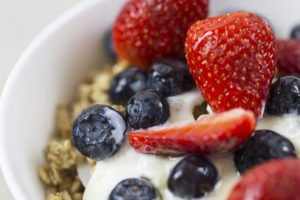
During the first week, we focus on the main meals: breakfast, lunch, and dinner. Continue keeping track of these throughout the whole training to ensure the rooting of all the new habits as part of your new everyday life.
Most of us need snacks in between main meals. Eating snacks is important to give rhythm to our day, and help us avoid constant nibbling. Our metabolism requires peaceful moments to process food. One well-proven recommendation is to eat every 3-4 hours.
This week, fill in all snacks into your chart, in addition to main meals. The snacks should include the same elements as the main meals, but in smaller portions of course.
Snack tips to help you:
- Fruit/berries 1-2 dl + nuts/almonds (5-8 pieces)
- Chopped vegetables, cherry tomatoes or baby carrots (half a carton/half a bag/1-2 dl) + nuts/almonds (5-8 pieces)
- Seed crackers, topped with vegetables
- Ready portion/bag of oatmeal (naturel) + linseed groats (tbsp) + fruit/berries 1 dl
Something a little more filling before exercise:
- 100% oat or rye bread + topped with smoked fish/tuna
- Fruit/berries 1-2 dl + nuts/almonds (5-8 pieces) + unflavored cottage cheese, curd, or yoghurt
Week 3: Remember to drink water
Listen
Breathe calmly and deeply.
Make yourself comfortable, but sit up straight, so air moves freely through your lungs.
Pick something you like and enjoy, and is important to you. Make a conscious decision to focus on this.
Decide, how long will you dedicate for this: Maybe read a chapter in a book, or a few pages in a magazine, or perhaps just decide to spend 5 minutes on this.
Decide what you want to focus on. Use all your 5 senses. What do you see, hear, smell? What taste is in your mouth and what do you feel on your skin?
If your focus shifts, take note of this, and bring your focus back.
Finally, thank yourself for doing this exercise and thus enhancing your own well-being.
Watch
Weekly exercise, week 3: Remember to drink water 
During the first week, we focused on the main meals, meaning breakfast, lunch, and dinner. The second week, we added snacks to the eating rhythm. To find the best meal rhythm for yourself, you have thought about the contents of meals and continued to moderate your consumption of sweets. Continue tracking your meals throughout the training to ensure rooting the new habits into your everyday life.
This week we turn our focus to drinking water. We all should drink at least 1.0 – 1.5 liters of pure water every day. Create the best way for you to mark down your daily water consumption: a notebook, mobile phone, calendar, or other. Insert your weekly consumption of water into the tracking sheet.
- Start your mornings with one or two glasses of water.
- Drink most of your daily consumption of water before noon, for the very natural reason, that drinking a liter of water just before going to bed, will wake you up at night and disturb your sleep.
- Water should be drunk especially between meals. In other words, it is not necessarily good to drink too much water during meals. Digestive enzymes will chop up the food more efficiently if the meal is not diluted with water.
Week 4: Work on your individual eating-related goal
Presence exercise
Before you begin, do one of the presence exercises in this module again to help you focus on the here and now.
The next lecture covers the body’s acid-base balance. The advice and instructions given by LovelyLife® coaches are always based on scientifically researched information and generally accepted nutritional recommendations. From the Duodecim Health Library, an officially accepted information source, an article can be found related to the topic, which states: “In a healthy person, the acidity or bacicity of food or drinks have no effect on the pH-value of blood or cells, because the kidneys regulate the acidity efficiently. When eating acid foods, kidneys secrete the excess hydrogen ions quickly into the urine and after basic food, they immediately reduce the secretion of hydrogen ions.”
I challenge you, quite exceptionally, during and after the next lecture, to contemplate an alternative perspective. The lecture combines the official nutrition doctrine with international natural medicine, and functional medicine doctrines. Even in Finland, nutritionist and therapist training is offerred, which combines both fields. At the same time, these so called alternative, or complementary, forms of medicine have not really integrated into the healthcare system. However, for example, China and France have made the non-traditional treatments a solid component in advancing the holistic health of humans, such as, with the help of homeopathy.
I bring up this diversity of perspectives in the field of advancing health and well-being, because the medical science in Finland still includes very little studies in, for example, nutrition and exercise. I see a lot of opportunities to broaden the know-how and operational procedures in our professional group, so that healthcare professionals could offer all-round support to patients, rehabilitation after illness, and prevention of future illnesses or injuries.
However, the instructions in this lecture are also not contradictory to the official healthy lifestyle guidelines – lots of vegetables, fruit and berries, enough water, less stress, and fresh air. By compiling the food triangle, or circle, with the help of the chart, we end up supporting our body’s balanced state, and thus, our well-being. The most important thing is to find the theme, which motivates us or our clients to implement change and commit to a healthier lifestyle.
Please write down your thoughts and give feedback about the contents of the lecture, and the varied perspectives that arise. Many of the elements and recommendations are very familiar also to Finnish nutritional recommendations. Adding vegetables to your daily diet in various forms is surely not harmful for anyone.
Watch
Weekly exercise, week 4: Work on your individual eating related goal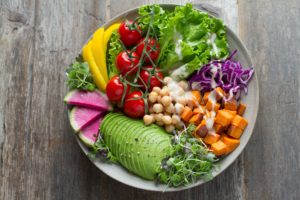
Continue following the lessons we have learned during the previous weeks.
But now is the week that you get to focus on the topic most important to you personally. The topic has surely been clarified during the first weeks of training, either by filling in your own tracking sheet, or by following the wellness journeys of others.
Please remember, your personal LovelyLife® wellness coach will help you with setting this week’s goal, and the means to reach it, if needed.
Pilot group vibes
“Information is top-notch, real, reliable, and believable. Nothing based solely on feelings and beliefs, but actual facts. Huge plus. The following five things changed/improved during the course:
- Eating breakfast became a habit
- Learned a lot about the quality and significance of nutrition
- Cut down on eating sweets
- The portion of vegetables in my diet has grown enormously”
Additional material
Perhaps you are interested, or your client wants to know more about the contents of daily meals. One excellent, and completely free, food diary model can be found here: https://fineli.fi/fineli/en/ruokapaivakirja
Download here a detailed manual for the system Food Diary Instructions and additionally Constructing meals
A transformation of the home kitchen is one of the essential elements to getting your environment to also help you find your new life. Hopefully, you will approach this issue with tenacity, and believe it to be good for you and your loved ones. Now it has finally come time to talk to people close to you. Would they be ready to improve their own well-being, while also support you on your journey, at least through the home kitchen transformation. The next document includes concrete to-do lists to clean up your kitchen, and support your well-being!
Home Kitchen Makeover Task Lists
To acceptably pass the module, you need to document your personal well-being journey into the tracking sheet, and your thoughts and observations into your diary of insights. In addition, the coach training includes other exercises, coaching exercises, and a multiple-choice exam. Please document the exercises according to instructions, and mark each section as completed, when you are done.
Multiple-choice exam
Every module ends with a multiple-choice exam. In order to move on to the next module, you need to pass a multiple-choice exam. You get to take the exam, once you have completed all coach training, coaching, and bonus exercises, and marked them as done. To pass the exam, you need to get at least 75% of the answers correct.
Good luck!
































 English
  Suomi
Suomi  简体中文
简体中文  Svenska
  Русский
  فارسی
فارسی